
General
- Hernia repair, including inguinal, ventral, incisional, and complex abdominal wall hernias, frequently performed using laparoscopic or minimally invasive techniques
- Gallbladder and biliary surgery, including laparoscopic cholecystectomy with or without intraoperative imaging or endoscopy, commonly performed to treat symptomatic cholelithiasis and biliary disease
- Upper gastrointestinal and abdominal procedures, including diagnostic and therapeutic endoscopy, lysis of adhesions, and abdominal explorations, often performed in combination to fully evaluate and treat complex intra-abdominal conditions


Overview:
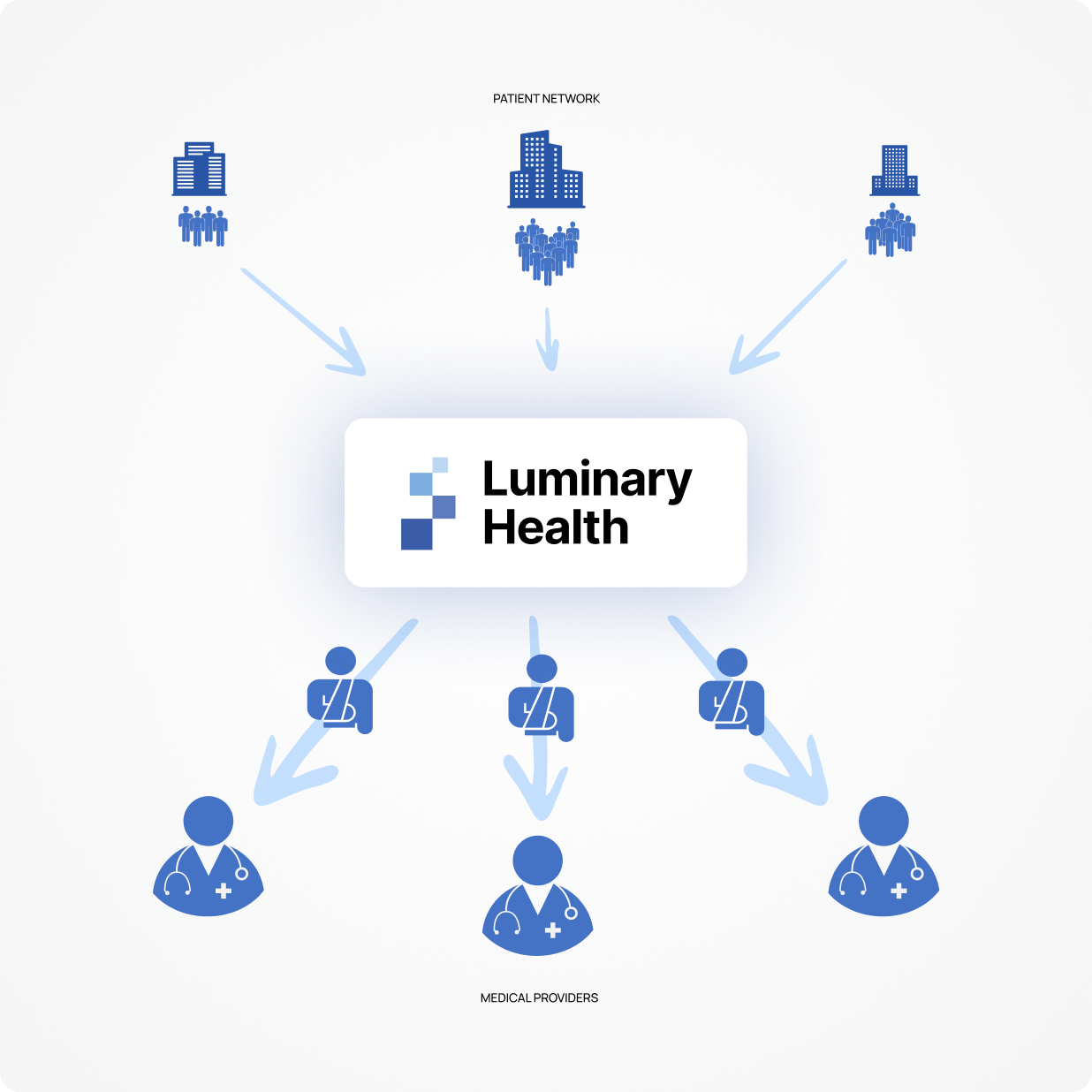
When a surgeon joins the Luminary Health network, their practice is connected to a national network of large self-insured employers and begins receiving referrals to care for eligible employees. Surgeons and their staff have access to the Luminary Health Portal, where they can review new referrals in real-time, coordinate scheduling, submit claims, and document patient outcomes following surgery.
Before a case is scheduled, Luminary ensures that all downstream agreements are in place. Luminary coordinates with facilities, anesthesia, pathology, to confirm coverage, pricing, and operational readiness—ensuring a smooth surgical experience and timely payment for all parties.
Following each episode of care, the practice submits a claim to Luminary and is reimbursed via ACH transfer within 30 days of claim receipt. Reimbursement is based on prospective, predetermined bundled rates, allowing practices to understand payment expectations before accepting a case. Clinical decision-making remains with the physician; when patient needs fall outside an established bundle, Luminary collaborates with the practice, payer, and downstream partners to negotiate a single-case agreement that supports appropriate care and fair reimbursement.
How It Works

01
Self-Insured Organizations
Many of the nation’s largest companies and government organizations now self-insure their workforce. Instead of paying monthly premiums to an insurance company, these “self-insured” organizations directly reimburse the healthcare services consumed by their employees. Most of the fortune 500 and may SMB companies are now self-insured.

02
What is a convener?
Most self-insured organizations partner with one of several third-party benefit administrators (otherwise known as a convener) to control and predict healthcare expenditures. Some conveners specialize in guiding employees who need surgical care.

03
Care Advocates
Most convener organizations employ care advocates. A care advocate works one-on-one with the employees of an organization to recommend where they and their family members can go to receive appropriate healthcare services. Care advocates recommend preferred surgeons to the patient whenever surgical services are required. Once the patient makes a selection, the care advocate communicates the referral to the practice.

04
Luminary Health Providers
Luminary Health is a collective of surgical practices, hospitals, and ambulatory surgery centers. As a group, Luminary Health has contracted with many of the nation’s top convener entities. As a result, Luminary Health providers are recommended to employees from hundreds of self-insured companies each and every day.

05
New Patient Referrals
Once you contract with Luminary Health, your practice will receive patient referrals from many of the nation’s largest self-insured companies and government organizations.
Ready to access our nationwide patient network?
Luminary Will Manage the Details